A Timeline to FNB Hobart Makers
This is not a tidy origin story. It does not begin with a funding round or a strategy document. It begins with a man, a shed, a pile of rescued timber, and about ten years of working alone. What follows is an honest account of the moments, experiments, and quiet realisations that eventually led to FNB Hobart Makers — a community-making and social-enterprise project rooted in dignity, craft, and the belief that everyone deserves a pathway to meaningful work.
The Long Solitary Beginning — A Decade in the Shed
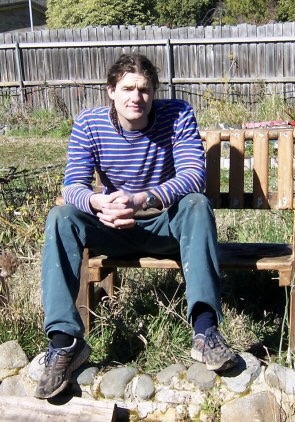
Long before there was a business name or a mission statement, there was Christiaan and recycled timber. For roughly ten years — quietly, persistently, without fanfare — he worked alone, learning the grain of Tasmanian wood, understanding what it gave back when you treated it honestly. The timber was salvaged: off-cuts, discards, pieces that other people had finished with. That instinct toward rescue and transformation turned out to be more than an economic choice. It was a philosophy forming.
Salamanca Market was the proving ground. Week after week, Christiaan brought wooden animals and timber art to one of Tasmania’s most discerning and beloved markets — a place where tourists and locals alike have high expectations and will not buy something simply because it is handmade. They buy it because it is good. Those years at Salamanca were a real-world education in craft, in customers, in pricing, in what people respond to and why. There was no buffer between the maker and the market. You learned fast, or you took your things home.
This period shaped everything that came afterward. The skills developed here were not just technical — they were relational, commercial, and deeply practical. What it means to make something worth selling, and to stand behind it with your name.
A Shift in Direction — From Solitary Making to Community
At some point — and these moments rarely arrive loudly — Christiaan began to look up from the bench. The question that started forming was not “how do I make more?” but “who else could be making?” The skills he had built over a decade were not only his to keep. Woodworking, it turned out, was a particularly powerful medium for teaching: it is tactile, it produces visible results, it allows for pacing and patience, and it offers the unmistakable satisfaction of holding something you made with your hands.
This shift — from solitary maker to someone who thought about what making could do for others — was the quiet hinge on which everything else turned.
Cognitive Factory — Designing Woodworking Around Capacity
Cognitive Factory was a significant experiment. The project brought woodworking to people with acquired brain injuries — a population whose capacity, energy, concentration, and fine motor control can vary dramatically from day to day, and sometimes from hour to hour. Standard workshop models, built around consistent attendance and predictable output, do not serve people whose needs look different.
What Cognitive Factory demanded — and what it taught — was the discipline of designing the woodworking process around the person rather than expecting the person to fit the process. Tasks needed to be genuinely achievable. Success needed to be real, not symbolic. The product needed to be worth making, not just therapeutic busy-work. This was harder to achieve than it sounds: it required thinking carefully about which parts of the making process were meaningful and accessible, and which parts could be adapted, modified, or supported without diminishing the maker’s ownership of the outcome.
Cognitive Factory was where the principle of capacity-shaped design was first genuinely tested. It is a principle that has not left the work since.
Woodwork Warriors — Craft Inside a Psychosocial Centre
Woodwork Warriors extended the work into a psychosocial centre, bringing a woodworking program to people navigating mental health recovery. The context here was different from Cognitive Factory in important ways: the community was larger, the support needs were different in character, and the social dimension of the workshop — the being-together, the shared focus, the quiet camaraderie of people working side by side — became as important as the making itself.
Woodwork Warriors reinforced something that was becoming clearer: woodworking is not only a skill. It is a container for routine, for presence, for purpose. Showing up and making something real is not a small thing when much else in a person’s life feels uncertain. The workshop gave people a reason to come, a thing to do, and something to show for it.
The lessons of Woodwork Warriors were social and emotional as much as they were practical — but the practical mattered too. Skills were genuinely transferred. People learned things. That combination — real skill development alongside real human connection — proved to be exactly the right pairing.
Microenterprise Builder — The Maker Leads, Support Provides the Systems
Microenterprise Builder introduced a new and important idea to the evolving framework: that the person with disability or complex support need should be the entrepreneur — the maker, the brand, the decision-maker — while support services provide the infrastructure that makes that possible. Tools. Systems. Administrative scaffolding. Not a program the person participates in, but a business they own and lead.
This reframing was significant. It changed the direction of the relationship: instead of a participant receiving a service, you had a maker running a micro-business, with support wrapped around their ambition rather than their diagnosis. The dignity embedded in this distinction is not abstract. It shows up in how a person talks about their work. It shows up in what they are willing to try. It shows up in the difference between something you do because it is offered to you, and something you do because it is yours.
Microenterprise Builder gave the project its economic logic as well as its ethical one.
Woodcraft Adventures Tasmania — Priscilla’s Pathway, and What It Taught
Woodcraft Adventures Tasmania — the business Christiaan and Priscilla built together — became its own kind of living experiment. Priscilla’s involvement was not incidental. She brought a different capacity to the enterprise: her pathway into the business was shaped by her own support needs, her own pace, her own strengths. The way her role developed over time — growing into real responsibility, real contribution, a genuine side hustle with her name behind it — was itself a proof of concept.
Woodcraft Adventures Tasmania tested what it actually looks like when capacity-shaped design is applied not as a clinical framework but as an everyday business reality. It is messier and slower than a standard model. It requires patience with non-linear progress. It also produces something a standard model cannot: a person who has genuinely built something, who knows it, and who carries that knowledge into every next thing they do.
The real-world lessons of Salamanca Market applied here too. Sales are honest. Customers either respond or they don’t. The dignity of a real transaction — someone handing over money for something you made — is irreplaceable. It is not the same as being told your work is wonderful. It is better.
What the Archive Kept Teaching — Dignity, Real Skills, and Independent Makers
Across all of these projects, certain lessons kept arriving in different forms. The first was that dignity is structural, not decorative. It is not achieved by calling someone an entrepreneur instead of a client, or by putting their name on a certificate. It is achieved by giving them actual control over actual decisions, actual skills that produce actual things, and actual income from actual sales.
The second lesson was about skill transfer. Genuine woodworking skills — the kind earned over a decade at Salamanca and refined through Cognitive Factory and Woodwork Warriors — can be shared. Not every skill, not at every stage, not with every person in the same way. But more than most conventional programs assume. When the task is designed well and the environment is right, people with significant support needs can learn to make things that are genuinely worth making and selling.
The third lesson was about the value of a community of independent makers — not a single social enterprise that employs people in its workshop, but a collective in which each person has their own micro-brand, their own story, their own product line, and their own stake in their success. Shared infrastructure, individual ownership.
The goal was never to run a program. The goal was to make it possible for people to run their own thing — and to have the skills, the systems, and the community around them to make it real.
FNB Hobart Makers — Why It Exists Now
FNB Hobart Makers did not emerge from a gap analysis or a funding opportunity. It emerged from accumulated experience — from a decade of solitary making at Salamanca, from designing woodworking around acquired brain injury, from running workshops inside psychosocial support settings, from building a microenterprise model that puts the maker at the centre, from watching Priscilla find her own pathway into real work, and from all of the quiet lessons in between.
FNB Hobart Makers is a community-making and social-enterprise project that brings this entire body of experience to bear on a single, honest question: how do we create the conditions in which people who have been excluded from conventional employment — people with disability, acquired brain injury, mental health challenges, or who simply don’t fit standard work models — can build something real, sell it, own it, and grow from it?
The answer is not a single program. It is a community of makers, each supported at their own pace and in their own way, sharing infrastructure, skills, markets, and the particular solidarity of people who have decided to make things instead of waiting to be included in something else’s story.
FNB Hobart Makers exists because the archive of this work kept pointing in one direction: toward each other. Toward community. Toward a model in which the maker is not the recipient of support but the author of a small, dignified, genuinely theirs enterprise — and in which the role of the people around them is to make that possible.
Ten years in a shed. A market stall. A workshop for people recovering from brain injury. A psychosocial centre. A woman finding her way into her own side hustle. A framework for microenterprise. A community of makers beginning to form.
That is how FNB Hobart Makers came to exist. Not all at once, and not by plan — but honestly, incrementally, and with a great deal of wood shavings along the way.


Leave a comment